
Why Trying to Keep Up With Every Tech Update Feels So Exhausting
This is a reflective look at why constantly following tech updates becomes exhausting, exploring information overload, mental fatigue, and the hidden cost of staying “up to date.”
What happens when notifications stop for a day? A reflective look at focus, attention, boredom, and emotional calm without constant alerts.
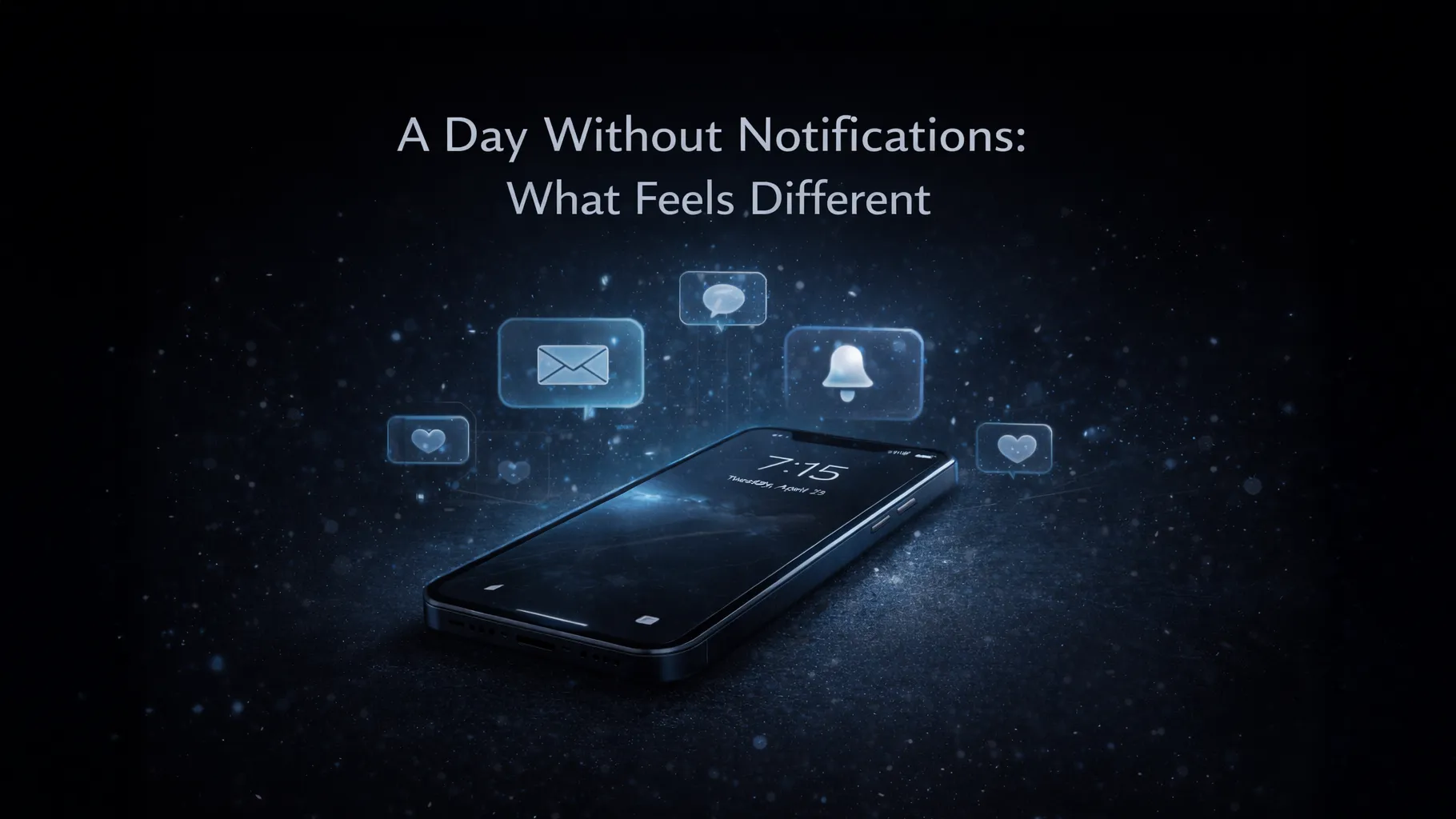
A day without notifications doesn’t begin with silence. It begins with an unfamiliar kind of space. The phone still lights up when you pick it up, the apps are still there, and the internet hasn’t disappeared. Yet something subtle shifts when alerts stop interrupting the flow of the day. The absence is not dramatic, but it is noticeable in ways that slowly unfold rather than announce themselves.
At first, the habit remains. You still reach for the phone at the usual moments, checking it during pauses, transitions, or moments of mild boredom. The difference is that nothing pulls you in. No vibration, no banner, no sound demanding immediate attention. The device feels quieter, less insistent, almost passive.
Without notifications guiding attention, the mind begins to settle into longer stretches of focus. Tasks don’t suddenly become easier, but they feel less fragmented. Instead of reacting to interruptions, attention stays with whatever is already in progress. This doesn’t result in constant productivity, but it does create continuity.
Time feels slightly different. Moments are not broken into short bursts by alerts. Instead, activities stretch naturally until they reach a stopping point. The day feels less chopped up, even if the number of tasks completed stays the same.
Notifications often carry a sense of urgency, even when the content itself is not urgent. A message, a like, or an update signals that something has happened elsewhere and demands awareness. Without these signals, urgency fades.
This does not mean important messages disappear. They simply wait. When checked intentionally, they are still there, but they no longer arrive with emotional force. The difference is not in availability, but in timing.
Over the course of the day, this change reduces background tension. There is less pressure to respond quickly, less feeling of being behind, and less concern about missing something important.
As notifications fade, attention moves outward. Sounds in the room become more noticeable. Small details in the surroundings receive more focus. Conversations feel less interrupted, even when brief.
This shift doesn’t require effort. It happens naturally when attention is no longer constantly redirected. The environment feels more present, not because it has changed, but because attention is no longer divided.
One unexpected effect of a notification-free day is the return of short moments of boredom. Waiting feels slightly longer. Pauses feel emptier. There is no immediate distraction filling every gap.
At first, this feels uncomfortable. But boredom doesn’t last. It either turns into rest or curiosity. Thoughts wander, ideas surface, or the mind simply pauses without input. These moments feel neutral rather than negative.
Without notifications, checking the phone becomes a choice rather than a reflex. This changes the relationship with content. Instead of reacting, you browse. Instead of responding, you read.
This intentionality alters how information is received. Content feels less overwhelming because it arrives on your terms. Even when consuming the same material, the experience feels calmer.
Emotionally, the day feels quieter. There are fewer spikes of excitement, irritation, or distraction. This doesn’t make the day dull, but it does make it steadier.
The absence of constant feedback creates emotional neutrality. Without likes, replies, or alerts shaping mood throughout the day, emotions rely more on real-world interactions and internal state.
Not everything changes. Work still needs effort. Messages still require responses. Responsibilities remain. A day without notifications does not remove complexity from life.
What it changes is the rhythm. The day moves at its own pace rather than the pace of incoming alerts. Attention feels less contested, even if demands remain.
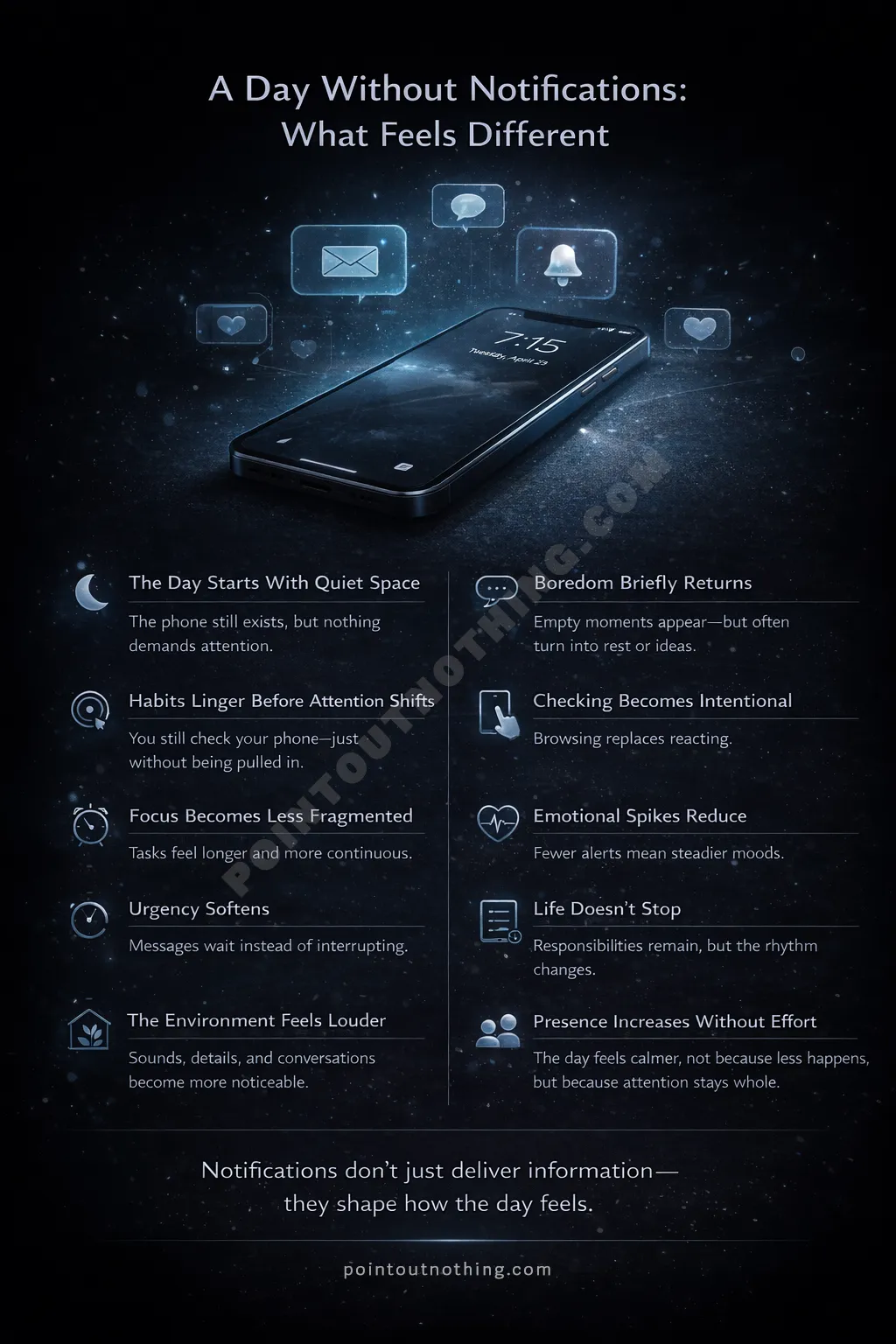
By the end of the day, the difference feels clearer. There is a sense of having been more present, even if nothing major happened. The mind feels less scattered, not because productivity increased, but because attention stayed more consistent.
Notifications return the next day. The system resumes without resistance. But the experience leaves a small impression, a quiet reminder that constant connectivity is not the same as constant necessity.
A day without notifications does not transform life. It simply reveals how much of daily experience is shaped by interruptions. Once noticed, that influence is hard to unsee.

A digital professional with over 12 years of corporate experience and a postgraduate qualification in Business Analytics and Business Intelligence. He has hands-on expertise in data visualization, SEO, digital marketing, web design, and modern web development with Next.js, along with practical experience as an AI generalist working on generative AI–driven business use cases. His work focuses on understanding digital transformation in the age of artificial intelligence and translating data, technology, and design into clear, user-centric digital experiences.
This is a reflective look at why constantly following tech updates becomes exhausting, exploring information overload, mental fatigue, and the hidden cost of staying “up to date.”
This is a reflective look at why the internet feels louder than ever while real change seems limited, exploring repetition, attention, and the gap between online noise and progress.