
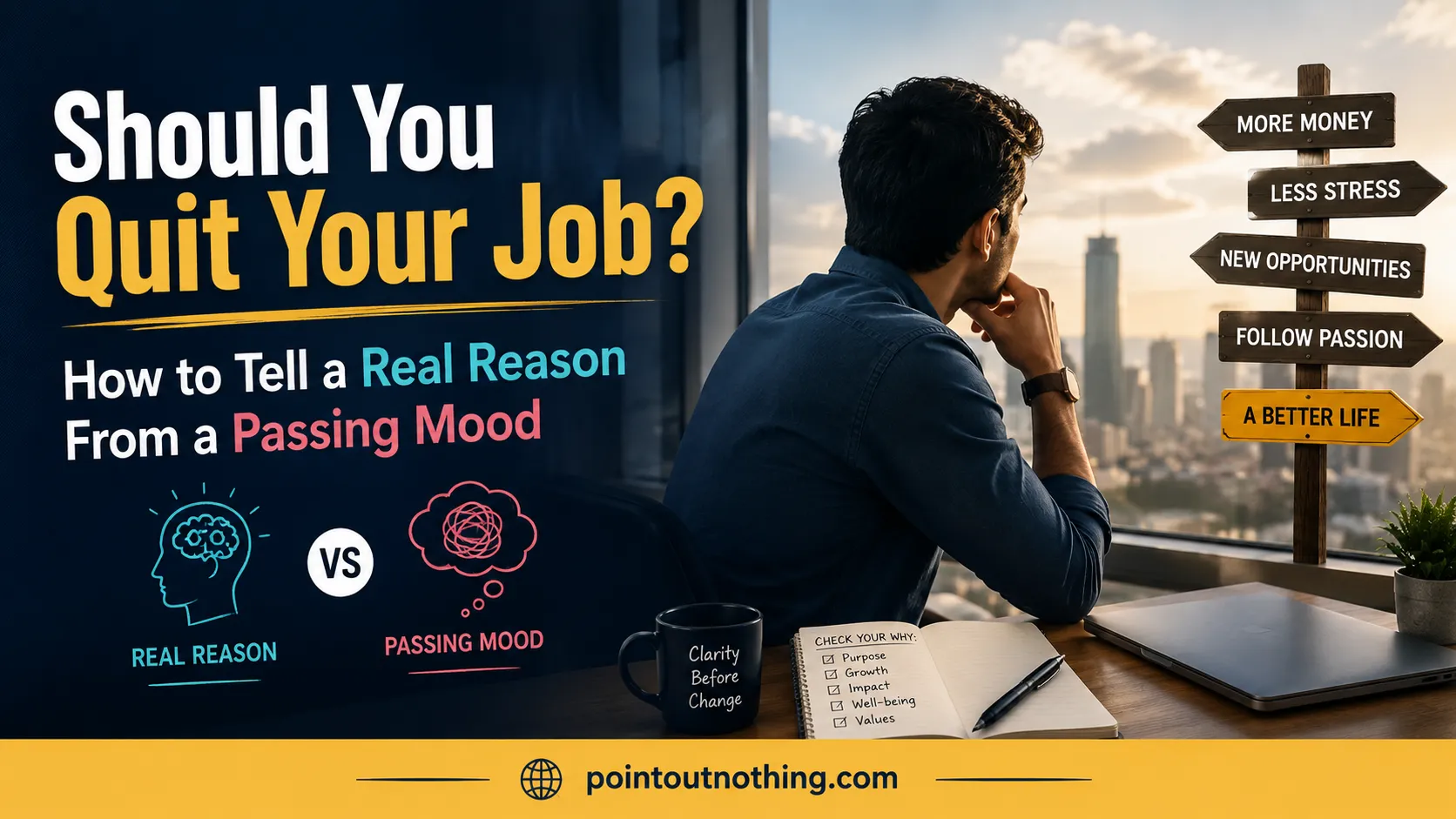
Should You Quit Your Job? How to Tell a Real Reason From a Passing Mood
Thinking of quitting your job? Here's a simple test to tell a genuine reason to leave from a passing mood, before a bad week costs you months.
Interviewing for a role with the "wrong" background? Here's how to win on honesty and hunger when you can't win on skill, without faking anything.
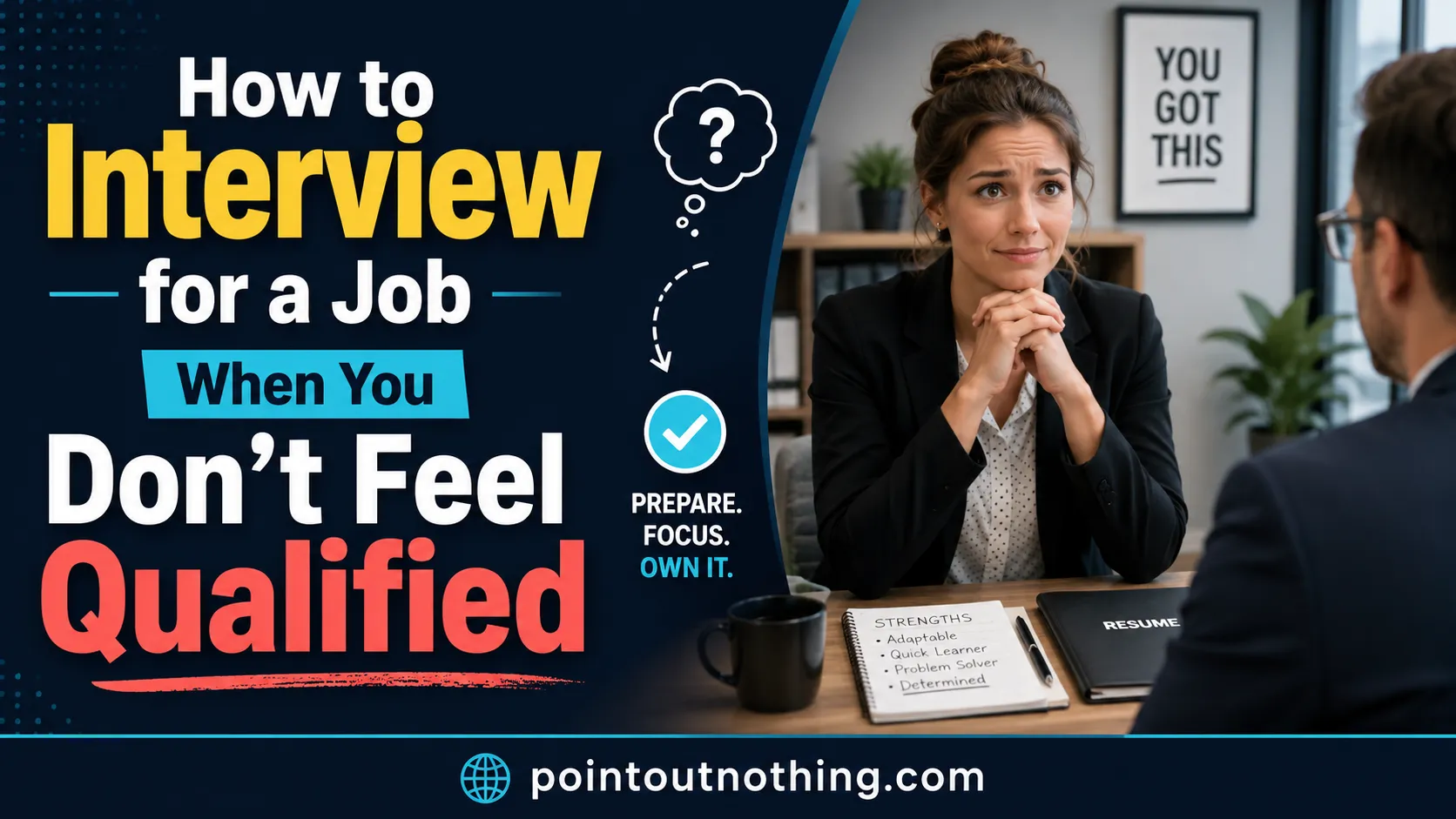
Some of the best opportunities of your life will arrive before you feel ready for them. You will look at the job description and see all the things you are not: the wrong degree, the missing years, the background that does not match. And a quiet voice will tell you not to bother, because surely they want someone who already fits.
I want to argue against that voice, because I once sat in exactly that seat, and the way I handled it restarted my entire career.
The interview I wanted with every cell in my body
Almost by accident, I had taken an aptitude test alongside a friend, treating it casually, the way you treat something you assume is meant for someone else. Only later did I realise it had been for a reputed company, the kind of place that was a dream for many people. When the call came for the interview, something in me woke up completely. After years of drifting, I wanted this with my whole being.
But I also carried a heavy inferiority complex into that room. The role was in a premium investment-banking environment, all about money, accounting, and corporate processes, a language I did not yet speak. I came from hotel management. Sitting there, I felt perhaps fifty percent confident. The other fifty percent was certain I did not belong.
And so I made one decision that this entire story turns on. I decided I would not overact. I would add no exaggeration, no pretending to be something I was not. I would simply be honest. If honesty was not enough, then so be it, but I would not win this by faking.
In the interview, I spoke plainly. I told them about my journey, including its messiness. I told them about my background, even though it did not match the role. I did not hide the gaps; I owned them. And then came the question I believe won me the job. They asked what I would do if I did not know something. I said, from the heart: "If you ask me something and I do not know the answer, I will make sure I know the answer by the end of today."
I was selected. After years of feeling behind, a door opened that changed everything, and it opened on honesty and hunger, not on skill I did not have.
Here is what I did not understand at twenty-something, and what I want to hand to you directly. In an interview for a stretch role, you are not actually being measured only against the job description. You are being measured against the other candidates, and a great many of them are polished performers who oversell. Interviewers meet that type all day. What they meet far less often is someone honest about their gaps and visibly hungry to close them. Rare is exactly what gets remembered.
Skills can be taught in weeks. The qualities that actually carry a new joiner, honesty, hunger, a genuine learning attitude, real respect for the opportunity, the maturity to say "I don't know that yet, but here's how I'll learn it", cannot be faked, and good interviewers know it. When you cannot win on skill, you can still win on character. But only if the character is real. People can feel the difference between a performance and a person, and the moment I stopped trying to look like a finance person and simply told the truth about who I was, the room changed.
This is not an argument for walking in unprepared and charming your way through. It is the opposite. The honesty only works because it sits on top of real effort. Here is how to put both together.
Before the interview, prepare without faking. Research the company properly. Understand the role even though it is not your background, enough to speak about why it matters and where you would fit. Prepare a simple, honest self-introduction. Identify your weak points honestly, and prepare how you will explain a career gap or a background mismatch, plainly and without apology. Prepare a few examples that show character, times you took responsibility, learned something hard, or owned a mistake, because those travel across any industry. Then practise speaking clearly, so nerves do not swallow the honest version of you.
In the room, lead with truth and do not overact. Speak honestly. Do not oversell skills you do not have. Show that you are serious about the opportunity and willing to learn. Explain what you did in previous roles with clarity, even if those roles look unrelated, the transferable thread is usually responsibility and reliability, not the industry. And when you genuinely do not know something, say so, and then say how you will learn it. That last move is the whole game.
The single most important thing you can prepare is your honest answer to: "What will you do when you don't know something?" Most candidates fumble this or give a polished non-answer. Your version should be true to how you actually learn and recover, not what sounds impressive. Mine, said plainly, was a promise to close the gap by the end of the day. Yours might be different, but it should be real, and it should make clear that not knowing something is a temporary state you actively fix, not a wall you hide behind.
Write that answer down before any interview. If your honest answer is not yet strong, if you realise you do not actually have a reliable way of learning hard things fast, then that, by itself, tells you what to build long before the interview arrives.
“The full story of that interview, and the checklist I used to prepare for it, is in First Job Confidence, but the principle is portable: when skill is missing, character must speak louder. ”
It is worth knowing what happens after the honest interview works, because it sets up the rest. When I started, the training was hard and I felt the same inferiority all over again, sitting among people who understood the work far better than I did. Many people, faced with that, quietly give up or coast.
But the discomfort turned out to be a gift. The others felt they already knew the material, so they stopped digging. I knew I did not, so I kept digging until I did, and in some areas I ended up understanding things more deeply than the degree-holders beside me. Feeling that you do not belong, if you channel it well, often makes you out-learn the people who feel they already do. So the honesty that gets you in is also the honesty that helps you stay: keep learning the thing that made you feel small, instead of hiding from it.
The trap here is thinking the goal is to get past the interviewer by appearing more qualified than you are. Even when that works, it sets you up badly, you arrive having promised a version of yourself that does not exist, and now you must either keep performing or be exposed. Owning your gaps honestly does the opposite: it sets a true expectation, and then every bit of fast learning you do exceeds it. Underselling slightly and over-delivering beats overselling and scrambling, every single time.
Decide, in advance, that you will not fake anything. Then do the honest preparation: research the company, understand the role, prepare your honest self-introduction and your honest explanation of any gap. Write down your real answer to "what will you do when you don't know something?" And when you walk in, lead with truth and let your hunger show.
You may not have every skill the role asks for. That is normal, and it is not the end. What you can always offer, regardless of your background, is honesty, hunger, and a genuine willingness to learn. Those are rarer than skills, and to the right interviewer, they are worth more.

From the Book
First Job Confidence tells the full story of the interview that restarted a stalled career — won not on the right degree, but on honesty and hunger — along with a practical interview-preparation checklist for candidates from any background.
View the Book on AmazonIf this helped, First Job Confidence covers the whole arc, preparing honestly, getting in, and starting from zero without hiding, in more depth, with a checklist you can use before your next interview. You might also want our guide to your first 90 days at a new job for what comes right after the offer.

A digital professional with over 12 years of corporate experience and a postgraduate qualification in Business Analytics and Business Intelligence. He has hands-on expertise in data visualization, SEO, digital marketing, web design, and modern web development with Next.js, along with practical experience as an AI generalist working on generative AI–driven business use cases. His work focuses on understanding digital transformation in the age of artificial intelligence and translating data, technology, and design into clear, user-centric digital experiences.
Thinking of quitting your job? Here's a simple test to tell a genuine reason to leave from a passing mood, before a bad week costs you months.
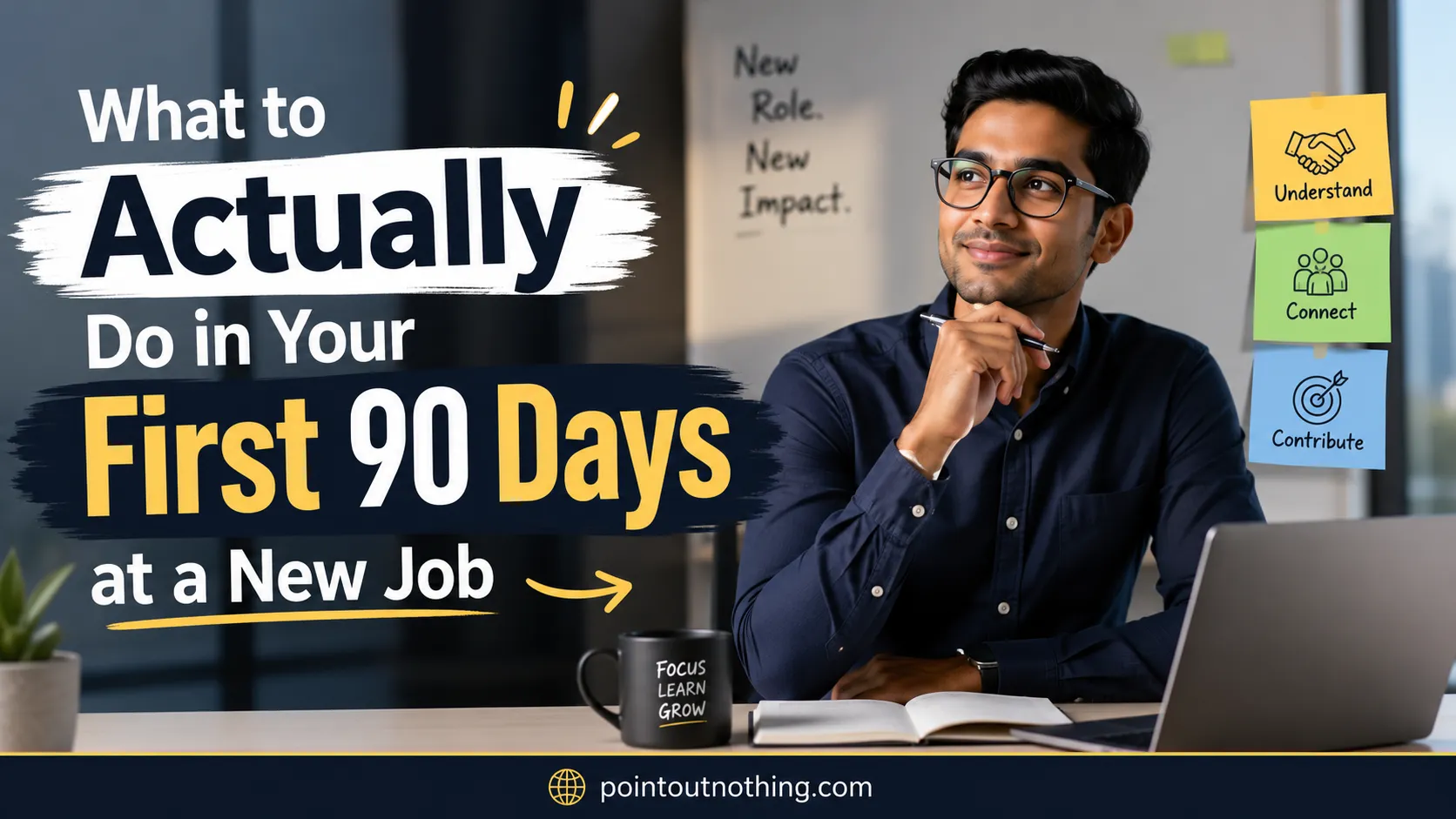
Just started a new job? Here's what to actually do in your first 90 days, observe before you prove yourself, build quiet trust, and set up your growth.