

How to Interview for a Job When You Don't Feel Qualified
Interviewing for a role with the "wrong" background? Here's how to win on honesty and hunger when you can't win on skill, without faking anything.
Thinking of quitting your job? Here's a simple test to tell a genuine reason to leave from a passing mood, before a bad week costs you months.
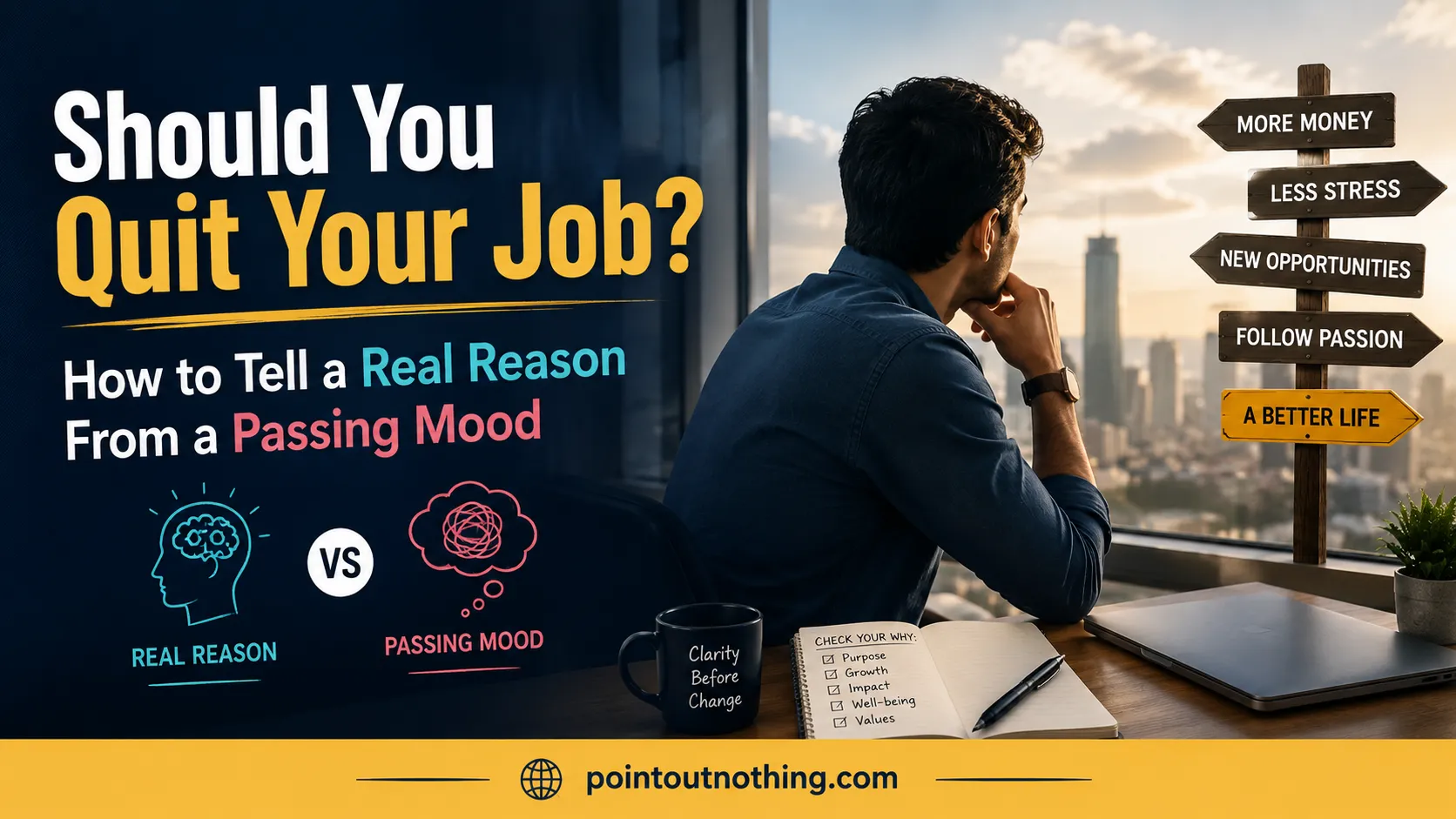
There is a particular feeling that makes people quit jobs, and it almost never feels like a mistake while it is happening. It feels like clarity. A bad week, a sharp argument with a manager, a group of friends making plans, a festival in the air, and suddenly leaving feels obvious, even liberating. The resignation letter writes itself. You feel light.
I know that feeling well, because I have acted on it more than once, and both times it cost me dearly. I want to walk you through what I learned, because the urge to quit is one of the most expensive emotions a young professional can act on without thinking.
If you are sitting with that urge right now, this article is not here to talk you out of leaving. Sometimes leaving is exactly right. It is here to help you tell the difference between a reason and a mood, because they can feel identical in the moment, and only one of them is safe to act on.
The first time, I was performing well at a hotel job. There was no real problem with the work. But December arrived, the festive mood was everywhere, and some of my friends decided to resign so they could enjoy the new year freely. They called me to join them. "Come on," they said. "Let's all be free together." And so, with no plan and no problem, I resigned too. It felt like part of the fun.
The fun did not last. After resigning I had no job for around six months, and they were not the carefree holiday I had pictured. I slept late and woke late. I felt dull, bored, and useless. My health slipped. There is a specific kind of heaviness that comes from being young, capable, and completely unused, and I sat in it for half a year.
The second time was different on the surface but the same underneath. After a stretch of overconfidence had soured things with a new manager, we had a sharp conflict, and one day he locked the department. I refused to back down, found a way to get the key, and reopened it myself to prove a point. The next morning I resigned. I told myself I was standing up for my dignity. Looking back, I was mostly running from a mess my own arrogance had created.
Neither resignation moved me toward anything. Both were reactions, dressed up as decisions.
Here is the uncomfortable thing I eventually understood. A mood is loud and a reason is quiet, so in the moment the mood almost always wins. Anger, boredom, the pull of friends, the spell of a festival, these arrive with force and urgency, and they make leaving feel like the brave, decisive thing to do.
But a mood is, by definition, temporary. The anger fades. The festival ends. The friends settle into their own lives. What does not fade is the consequence: a gap on your record, lost income, lost momentum, and the slow realisation months later that you traded something stable for a feeling that did not last the week.
This is the trap, and it is worth saying plainly: the most damaging career decisions are usually not dramatic disasters. They are small, reasonable-feeling choices made in a temporary emotional state, that turn into permanent facts. A resignation made for a mood becomes a gap that follows you for years. The mood is gone by February. The gap is still on your CV.
Over the years I have boiled this down to a single discipline that would have saved me both of those lost stretches. Before you resign, force yourself to finish this sentence, in writing, honestly:
“I am leaving this job in order to move toward .”
That is the whole test. If you can finish the sentence with something real and specific, a concrete better opportunity, a clear plan, a genuine problem you have thought through with a calm mind, then you may well be making a sound decision. If you cannot finish it, or if the only honest ending is "to get away from this feeling" or "because my friends are" or "because I'm fed up this week," then you are not ready to quit. You are reacting, and the calm version of you, a month from now, will not thank you for it.
A quitting decision should be about what you are moving toward, not only what you are running from. Running away rarely solves the thing you were running from, because that thing usually packs its bags and follows you.
If the one-sentence test leaves you unsure, here is a second one. Imagine yourself five years from today, looking back at the decision you are tempted to make this week. Would that older version of you quietly nod, or shake their head?
Your future self is the most honest advisor you have, and they are always available. They are not caught up in this week's argument. They can see the whole arc. Run the big choices past them. When I look back now, my five-years-older self is shaking his head at both of those resignations, not because leaving a job is always wrong, but because I left for nothing, toward nothing.
I want to be fair to the other side, because none of this means you should cling to a job that is genuinely wrong for you. There are real reasons to leave, and they tend to share one quality: they survive a calm mind. A clearly better opportunity. A role with no path forward that you have honestly assessed over time, not just on a bad Tuesday. A workplace that is harming your health or asking you to compromise your integrity. A direction you have thought through and can articulate without the heat of a particular moment.
The difference is not whether you feel strongly. The difference is whether the reason holds up when you are calm. A genuine reason still looks like a good idea after a good night's sleep and a quiet conversation with someone you trust. A mood usually does not.
“This is one of several early-career traps I write about more fully in First Job Confidence — the quiet, reasonable-feeling decisions that cost far more than the loud, dramatic ones ever do.”
People sometimes defend an impulsive resignation as bravery, "I had the guts to walk away." Sometimes that is true. But often what looks like courage is just impatience with discomfort, and real courage is the harder, quieter thing: staying calm enough to make the decision properly, even while every loud feeling is demanding you act now.
So do not mistake the rush of quitting for the rightness of quitting. The rush is just adrenaline. Let it pass, and then decide.
If the urge to resign is on you right now, do not act on it today. Instead, do three small things. Write the one-sentence test and see honestly whether you can finish it. Sleep on it for at least a few days and notice whether the feeling holds or fades. And talk it through with one person whose judgment you trust and who is not caught up in the same mood you are.
If, after all that, the reason is still standing, clear, specific, and pointing toward something, then leave with confidence; you have done it properly. But if the feeling has quietly shrunk back down to the size of a passing bad week, you will have saved yourself from a decision that, in my own life, I am still wishing I could take back.

From the Book
First Job Confidence is an honest account of how an early career can drift — not through one disaster, but through small, comfortable decisions like a casual resignation. If this trap feels familiar, the book maps the others that tend to travel with it.
View the Book on AmazonIf this resonated, First Job Confidence explores the wider pattern behind decisions like this one, and how to keep your early years building instead of drifting.

A digital professional with over 12 years of corporate experience and a postgraduate qualification in Business Analytics and Business Intelligence. He has hands-on expertise in data visualization, SEO, digital marketing, web design, and modern web development with Next.js, along with practical experience as an AI generalist working on generative AI–driven business use cases. His work focuses on understanding digital transformation in the age of artificial intelligence and translating data, technology, and design into clear, user-centric digital experiences.
Interviewing for a role with the "wrong" background? Here's how to win on honesty and hunger when you can't win on skill, without faking anything.

Just started a new job? Here's what to actually do in your first 90 days, observe before you prove yourself, build quiet trust, and set up your growth.