
How to Design a Home Office That Inspires You and Increases Focus
This is a practical guide on how to design a home office that feels calm, organized, and inspiring, with simple layout, lighting, storage, and decor ideas.
A home office is not just a table, chair, laptop, and internet connection.
At first, it may look that simple. You place your system in one corner, add a chair, keep a notebook nearby, and tell yourself, “This is enough. I can work from here.”
And yes, for a short period, it may feel exciting.
When I started working seriously from home, I also believed the same thing. I had a Windows machine that worked almost 50-50, a simple table, and a room that was not very bright. Still, it felt special because it was my own workspace. I added a few plants, kept the light low so I could focus on the screen, and created a small setup that made me feel like I was starting something meaningful.
For some time, it worked.
But slowly, I started noticing something. The room was calm, but it was also too dark. The low light that once helped me focus slowly started affecting my mood. I felt tired more often. I was working, but the space was not giving me energy. It was silently pulling me down.
Later, when I spoke to a few friends who were also working from home or freelancing, I noticed a pattern. Some of them preferred coworking spaces because they could not stay productive inside the same room every day. Others worked from home, but they chose bright, airy spaces with good sunlight, clean desks, and some natural elements around them.
That was when I realized something important.
Your home office is not only about expensive equipment. It is about how the space makes you feel every day.
A powerful computer is useful. A good chair is important. A nice desk helps. But the real foundation of a good home office is the atmosphere. The light, air, layout, comfort, colors, plants, storage, and the emotional connection you have with the space all matter.
If your workspace feels heavy, cluttered, dark, or uncomfortable, your mind slowly starts reacting to it. But when your workspace feels open, calm, and intentional, it becomes easier to sit down, focus, create, and continue.
Why Home Office Design Matters More Than We Think
Working from home gives freedom, but it also creates a challenge. The same place where you relax, sleep, eat, and spend time with family also becomes the place where you need to think, plan, solve problems, create content, attend meetings, and stay productive.
That is not always easy.
A poorly designed home office can make work feel scattered. You may sit for hours but still feel distracted. You may have all the tools, but your mind may not settle. Sometimes the issue is not your motivation. Sometimes the space itself is not supporting your work rhythm.
A well-designed home office helps you create a mental boundary. When you enter that space, your mind understands that it is time to work. It gives structure to your day. It helps you feel more professional, even when you are working from a small corner at home.
The goal is not to create a perfect Pinterest-style office. The goal is to create a space that supports your focus, mood, and energy.
You do not need to spend a lot of money. You need to make smart decisions.
Good light. Fresh air. A comfortable chair. A clean desk. Simple storage. A few personal details. A setup that feels calm enough to think and inspiring enough to return to every day.
That is where good home office design begins.
1. Bright Natural Light Home Office for Better Focus
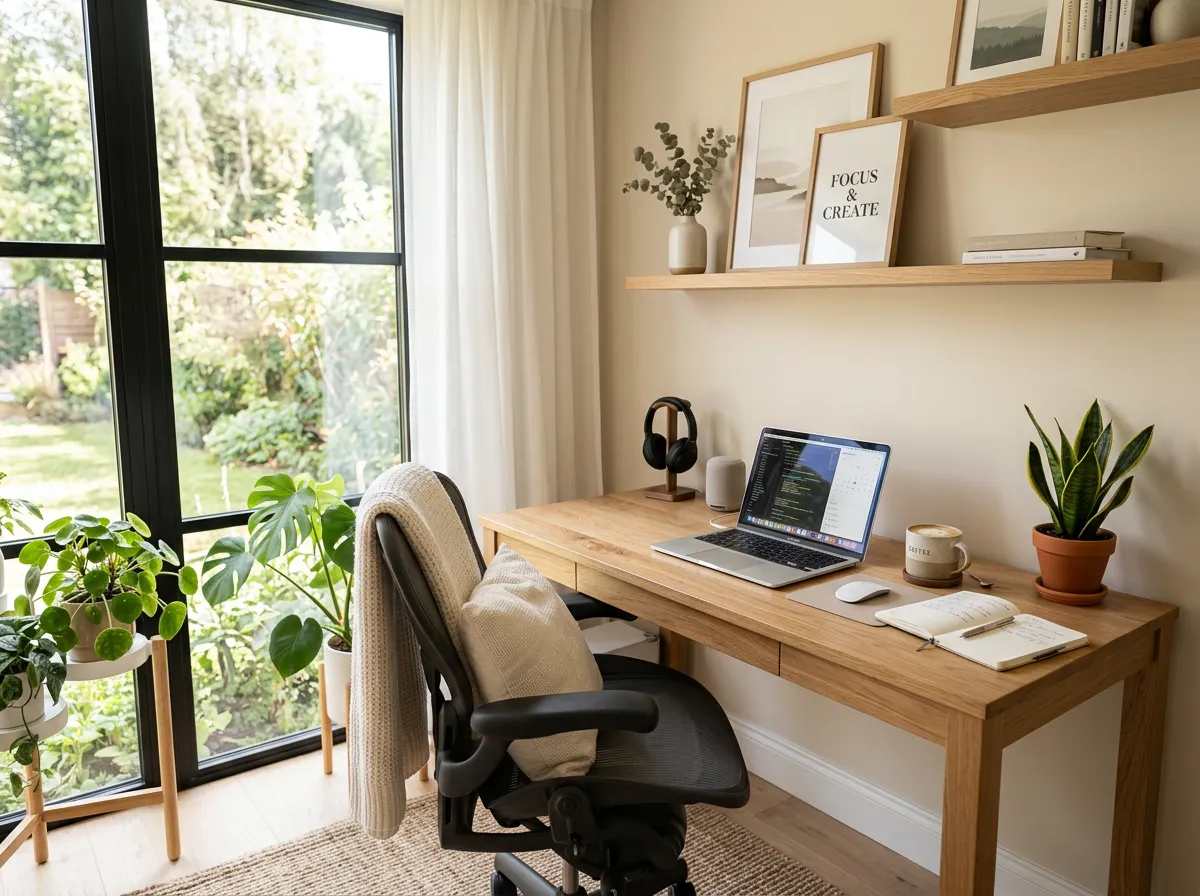
This setup is a beautiful example of how natural light can completely change the feeling of a workspace. The desk is placed near a large window, allowing daylight to enter the room freely. The wooden desk, soft curtains, plants, and minimal accessories create a calm and fresh working environment.
This kind of home office works because it does not feel closed or heavy. The view outside gives the eyes a natural break from the screen. The plants bring life into the space, and the warm wood surface prevents the room from feeling too cold or corporate.
When you work long hours from home, natural light becomes more important than many people realize. A dark room may feel cozy for a while, but over time it can affect your energy. A bright room helps you feel awake, alert, and mentally active.
This setup is ideal for writers, bloggers, designers, remote workers, and entrepreneurs who spend long hours thinking, planning, or creating.
The best part of this design is its balance. It feels professional without looking stressful. It feels calm without looking empty. It gives enough space to work, but it still feels personal.
| Pros | Cons |
|---|---|
| Natural sunlight improves the overall mood of the workspace. | Too much direct sunlight may create screen glare. |
| Plants and wooden textures make the office feel warm and alive. | Window-side setups may need curtains or blinds for better light control. |
| The clean desk layout supports better focus. | If the outdoor view is distracting, the desk direction may need adjustment. |
| The window view gives a natural visual break during work. | — |
Design takeaway:
Place your desk near natural light whenever possible, but make sure the screen is positioned in a way that avoids glare. Soft curtains, indoor plants, and warm wooden elements can make the space feel more relaxed and productive.
2. Small Home Office Corner That Uses Space Smartly
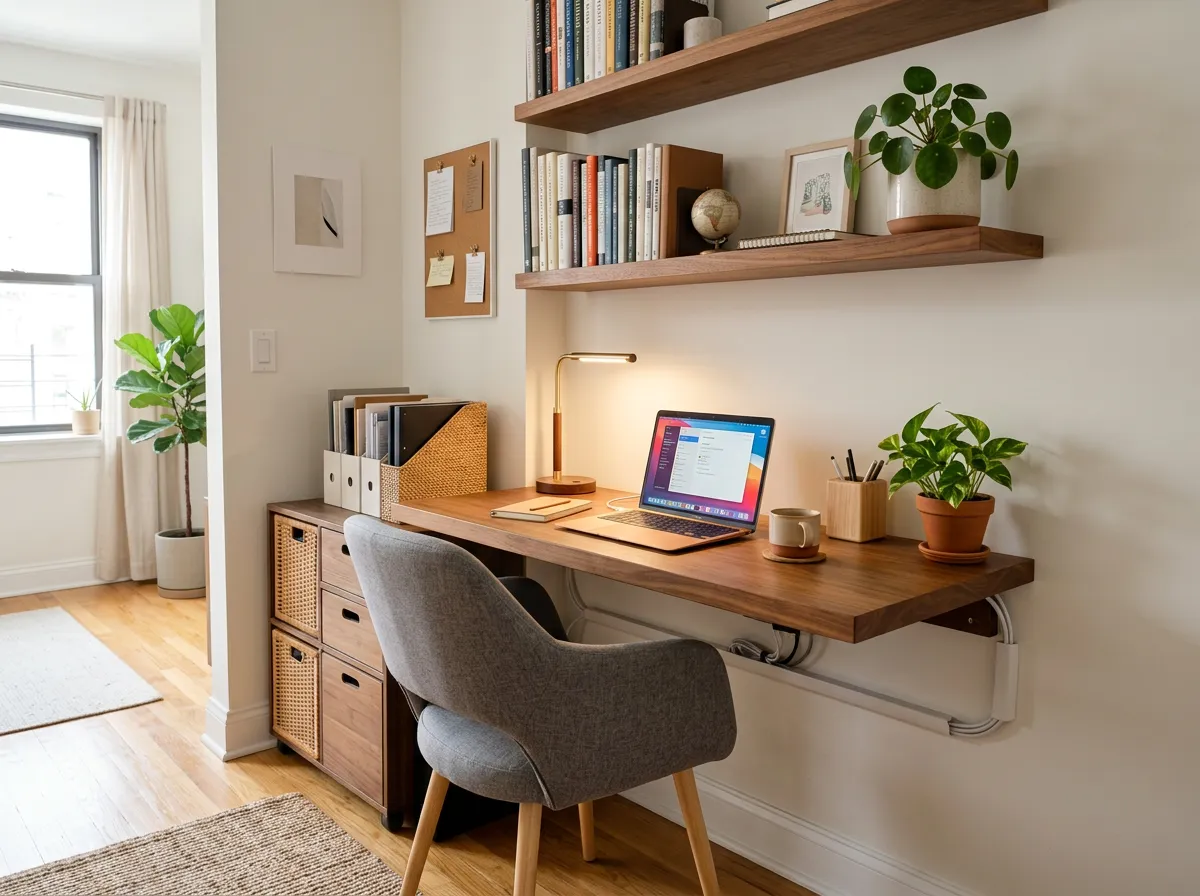
Not everyone has a separate room for a home office. Many people work from a bedroom corner, hallway, living room side wall, or a small apartment space. This setup shows how a small area can still become a practical and beautiful work zone.
The floating wooden desk keeps the floor visually open. The wall shelves provide storage without taking extra room. Books, small plants, a lamp, and simple organizers make the setup functional without overcrowding it.
This is a very useful design idea for people who think they do not have enough space to create a home office. You do not always need a large room. Sometimes a well-planned wall, a compact desk, and vertical storage are enough.
The important lesson here is to use height, not just floor space. Wall shelves, floating desks, compact cabinets, and cable management can make even a narrow corner feel organized.
The warm desk lamp also adds a cozy feeling. This matters especially if the space does not receive enough natural light during the evening.
| Pros | Cons |
|---|---|
| Works well for small apartments and compact homes. | Limited desk depth may not suit people with multiple monitors. |
| Wall shelves help save floor space. | Storage can become cluttered if shelves are not maintained. |
| The floating desk gives a clean and modern look. | Wall-mounted desks need proper support and installation. |
| Good storage keeps the work area organized. | — |
Design takeaway:
If you do not have a separate home office room, choose one clean wall and turn it into a focused work corner. Use shelves, small cabinets, and a simple desk to create a compact setup that still feels complete.
3. Plant-Based Home Office That Feels Fresh and Calm
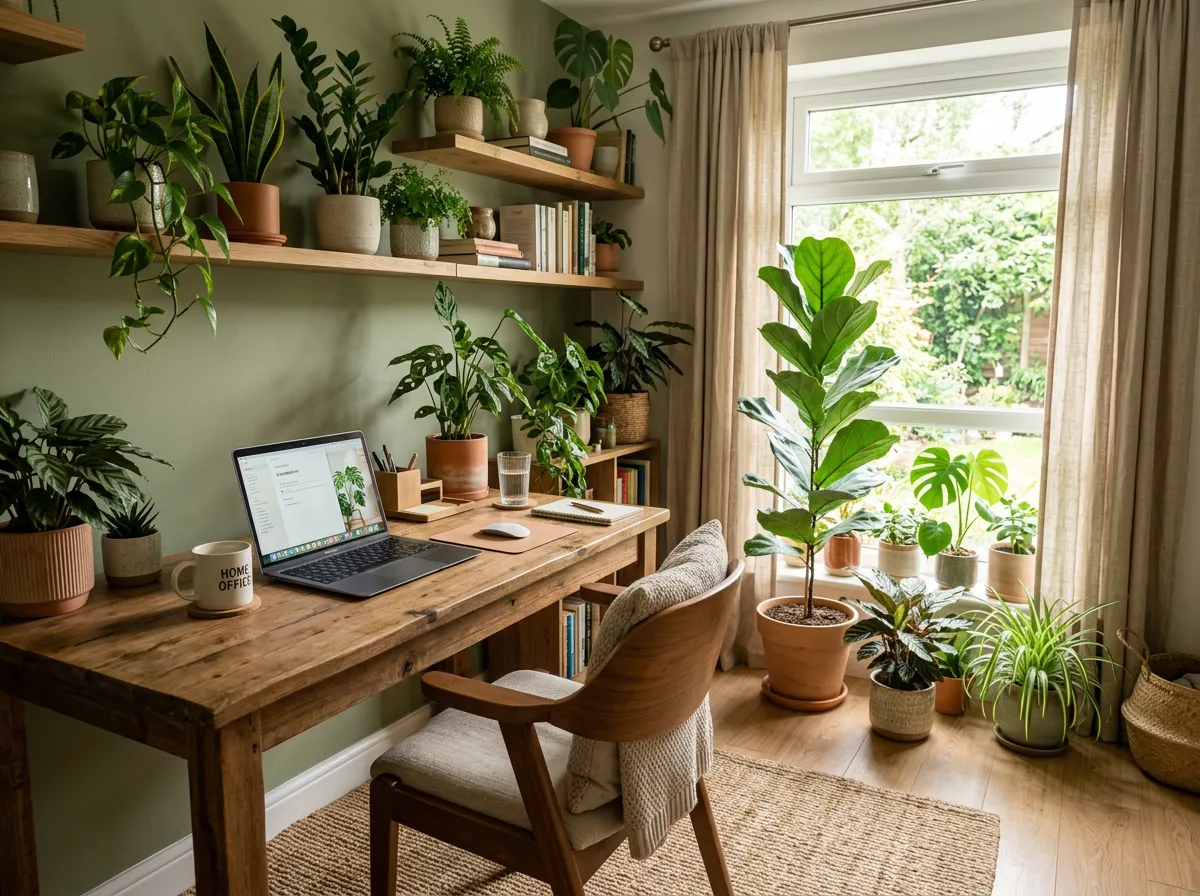
This setup creates a strong connection with nature. The green wall, indoor plants, wooden desk, soft curtains, and natural textures make the office feel calm, fresh, and breathable.
A plant-based home office is not just about decoration. Plants can soften the look of a workspace and make it feel less mechanical. When you are surrounded only by screens, wires, and devices, the space can feel dry and stressful. Greenery brings a visual balance.
This type of setup is especially helpful for people who work creatively or spend long hours indoors. The plants create a gentle background that helps the room feel alive. The natural colors reduce visual stress and make the office feel peaceful.
But this setup also needs maintenance. Plants need light, watering, and care. If you are not ready to maintain many plants, start with two or three easy indoor plants instead of filling the entire room.
What I like most about this setup is the emotional comfort. It does not feel like a strict office. It feels like a space where you can think, breathe, and work without pressure.
| Pros | Cons |
|---|---|
| Greenery makes the office feel fresh and peaceful. | Too many plants can make the space harder to maintain. |
| Natural textures create a warm and grounded mood. | Some plants need specific light conditions. |
| Good for creative work, writing, planning, and deep thinking. | Overdecorating with plants may reduce usable desk space. |
| Plants help reduce the empty feeling of plain interiors. | — |
Design takeaway:
Add plants slowly. Start with one desk plant and one floor plant. Choose easy-care indoor plants and place them where they receive enough light. The goal is to make the room feel fresh, not crowded.
4. Modern Desk Setup for Deep Work and Productivity
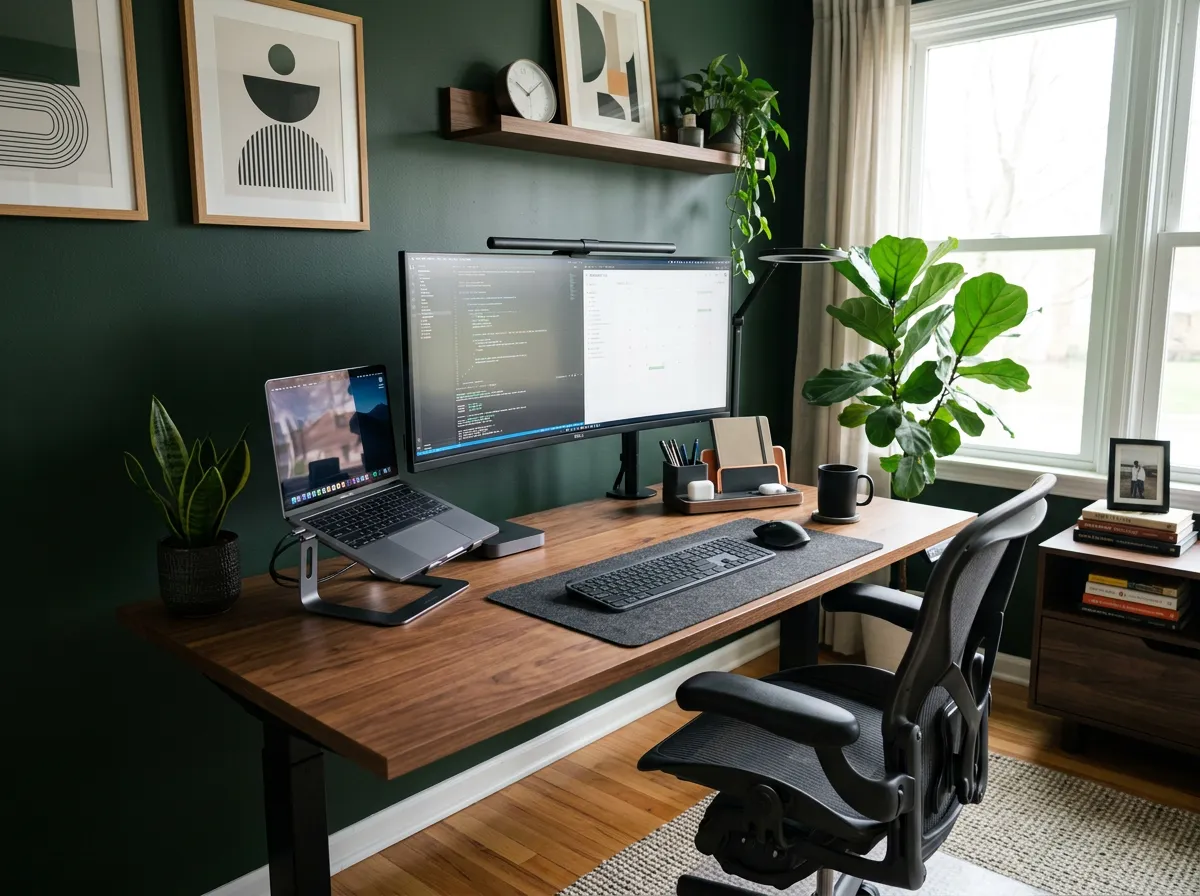
This home office setup is designed for serious productivity. The large monitor, laptop stand, keyboard, mouse, desk mat, ergonomic chair, and task lighting make it ideal for deep work.
This type of setup is useful for developers, designers, analysts, editors, marketers, traders, and anyone who needs a focused digital workstation. The large screen improves workflow, while the clean desk keeps the mind from feeling distracted.
The dark green wall gives the space a strong and focused personality. It adds depth without making the room look messy. The wooden desk balances the darker color and keeps the workspace warm.
One important detail here is ergonomics. The monitor height, chair comfort, keyboard position, and desk space all affect how long you can work comfortably. A beautiful office is not useful if your neck, back, or wrists start hurting after a few hours.
This setup reminds us that productivity design is not about adding more items. It is about keeping only what supports your work.
| Pros | Cons |
|---|---|
| Great for focused digital work and long work sessions. | Large monitor setups need more desk space. |
| Large monitor improves productivity and multitasking. | Dark wall colors may feel heavy in rooms with poor lighting. |
| Ergonomic chair supports comfort during long hours. | More devices can create cable clutter if not managed properly. |
| Dark wall color creates a focused and professional mood. | — |
Design takeaway:
If your work depends heavily on a computer, invest first in comfort and layout. Keep the screen at a comfortable height, use a proper chair, manage cables, and keep only essential items on the desk.
5. Creative Home Office Setup That Inspires Ideas
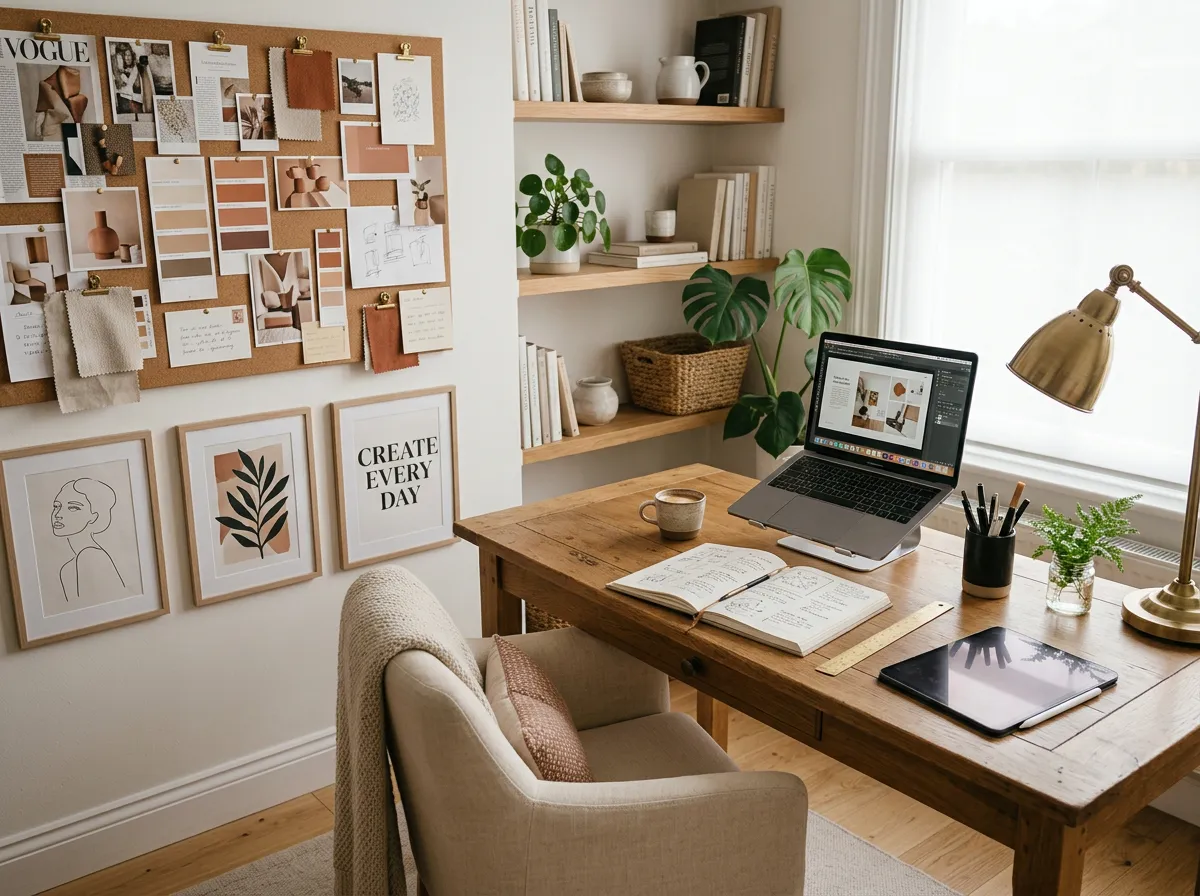
This setup is perfect for creative people. The mood board, sketches, tablet, notebook, laptop, warm lamp, and framed art make the workspace feel personal and idea-driven.
A creative home office should not be too empty. Minimalism is good, but creative work often needs visual inspiration. A mood board helps collect ideas, colors, references, notes, and concepts in one place. It keeps your thinking visible.
This kind of setup works well for bloggers, designers, content creators, artists, social media managers, and entrepreneurs who need to generate ideas regularly. It gives the space a sense of movement and imagination.
The desk is still clean enough to work, but the wall carries creative energy. That is a good balance. When your desk becomes overloaded with papers and samples, it becomes stressful. But when your ideas are organized on a wall or board, they can inspire you without disturbing your workflow.
This setup also feels personal. That matters because your home office should not feel like a rented desk. It should remind you why you are building, creating, or working.
| Pros | Cons |
|---|---|
| Great for creative professionals and content creators. | Too many visuals can become distracting. |
| Mood boards help organize ideas visually. | Mood boards need regular updates to stay useful. |
| Warm lighting creates a cozy and inspiring mood. | Creative tools can create clutter if not organized. |
| The setup feels personal and motivating. | — |
Design takeaway:
Create one inspiration area in your home office. It can be a cork board, wall grid, small shelf, or framed quote. Keep it meaningful and updated. Your office should remind you of the work you want to create.
6. Clutter-Free Home Office for a Clear Mind
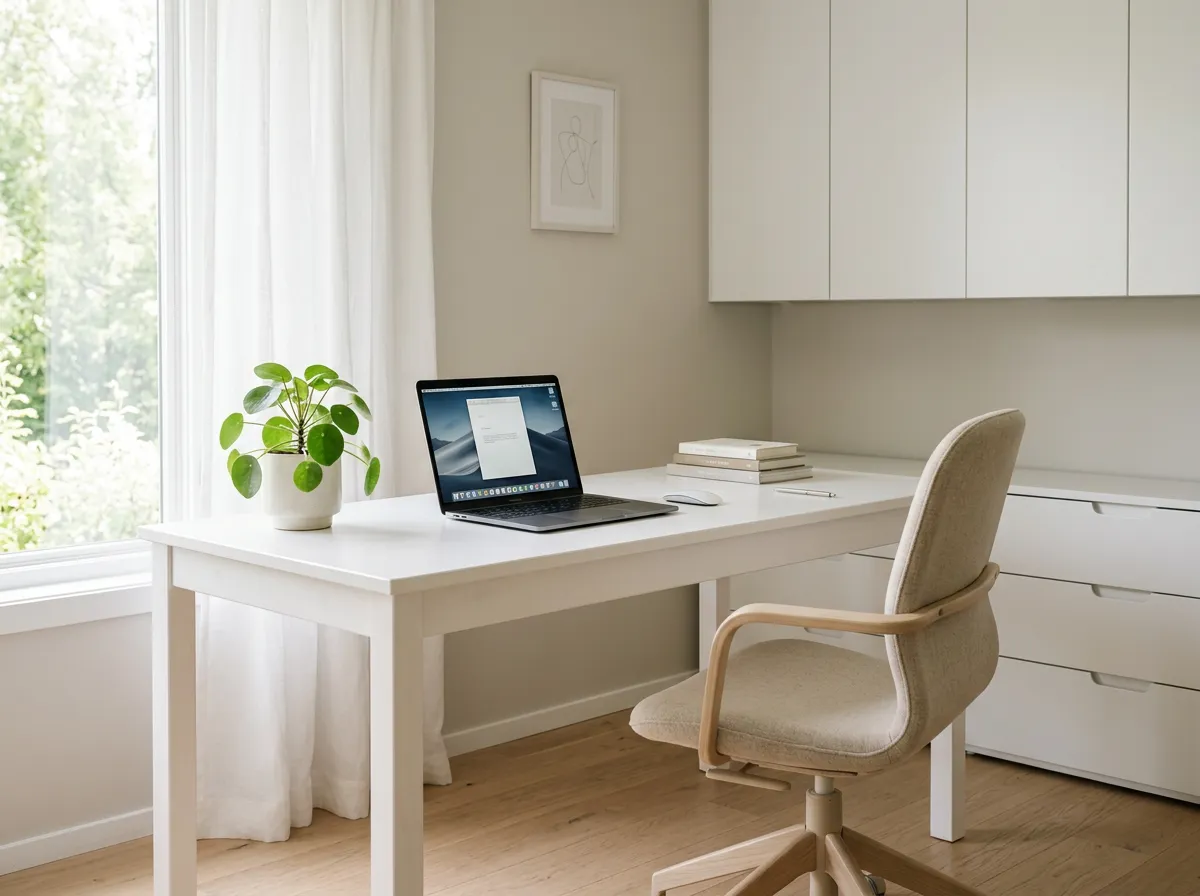
This setup shows the power of simplicity. The white desk, soft chair, hidden storage, natural light, and minimal decor create a clean and peaceful workspace.
A clutter-free home office is not boring. It is intentional. When the desk has only a laptop, a plant, a few books, and enough open space, the mind feels less crowded. This type of setup is perfect for people who get easily distracted or feel mentally tired in busy environments.
The hidden cabinets are the strongest feature here. Many people try to keep everything on the desk because they want quick access. But slowly, the desk turns into storage. A good home office needs hidden storage so the working surface can stay clean.
This setup may look simple, but it can be very effective. It gives the mind room to breathe. It is especially useful for writing, reading, planning, studying, and administrative work.
The challenge is that minimal spaces require discipline. If you do not have a system for storing things, clutter will return quickly.
| Pros | Cons |
|---|---|
| Clean layout supports better mental clarity. | May feel too plain for highly creative work. |
| Hidden storage keeps the workspace organized. | Needs consistent organization to stay clutter-free. |
| Natural light makes the minimal room feel soft and pleasant. | Not ideal for people who need many tools within reach. |
| Great for focused writing, planning, and calm work. | — |
Design takeaway:
Keep your desk surface as clear as possible. Use drawers, cabinets, boxes, or shelves to store items you do not need every hour. A clear desk often creates a clearer mind.
Practical Tips to Design Your Own Home Office
After looking at these six home office ideas, the main point is simple: your workspace should support the way you work.
- You do not need to copy any setup exactly. Instead, take the useful idea from each one.
- From the bright natural light office, take the importance of sunlight.
- From the small office corner, take the lesson of smart space usage.
- From the plant-based office, take the freshness of greenery.
- From the productivity desk setup, take the importance of ergonomics.
- From the creative office, take the value of inspiration.
- From the clutter-free office, take the power of simplicity.
Here are a few practical things to focus on first:
Choose the Right location
Pick a place where you can work without too many interruptions. It does not have to be a separate room. Even a corner can work if it feels mentally separate from the rest of the home.
Prioritize natural light and ventilation
A well-lit and well-ventilated space can improve how you feel during the day. If your room is dark, use warm lighting and keep the space as open as possible.
Invest in a comfortable chair
A good chair matters more than many decorative items. If you work long hours, comfort should come before style.
Keep your desk simple
Your desk should not become a dumping place. Keep only what you use daily. Store the rest.
Add Natural Elements
Plants, wood textures, soft curtains, woven rugs, and warm colors can make the office feel less stressful.
Create a small inspiration point
This can be a quote, artwork, family photo, vision board, or anything that reminds you why you are doing the work.
Control cables and storage
Messy cables and scattered papers can make even a beautiful office feel chaotic. Use cable clips, boxes, drawers, or shelves to keep things under control.
Design for your real work style
Do not design your office only for photos. Design it for your daily routine. If you write, create a calm writing space. If you design, keep room for references. If you attend meetings, think about your background and lighting. If you do deep technical work, focus on screen comfort and ergonomics.
You Do Not Need a Perfect Office to Start
One of the biggest mistakes people make is waiting for the perfect setup.
They think they need the best desk, the latest chair, a premium monitor, expensive lights, and a beautiful room before they can work properly.
But the truth is, your home office can improve step by step.
Start with what affects your daily energy the most.
Open the curtains. Move the desk closer to light. Remove unnecessary items. Add one plant. Fix your chair height. Keep a notebook nearby. Add a lamp. Organize your cables. Create a small shelf. Slowly, your space will begin to feel better.
A good home office is not built in one day. It grows with your work.
When I look back at my own early setup, I do not regret starting with a simple machine and a basic room. That was part of the journey. But I also learned that the room we work in slowly becomes part of our mindset.
If the room feels dull, our energy can become dull.
If the room feels alive, clean, and inspiring, it becomes easier to show up.
That is the real purpose of home office design.
Not to impress others.
Not to create a perfect photo.
But to build a space where you can sit every day and feel ready to do meaningful work.
Designing a home office is not only an interior decision. It is a productivity decision, a lifestyle decision, and in many ways, a mental health decision.
Your workspace has the power to influence your focus, energy, creativity, and consistency. A dark and cluttered space can slowly drain you. A bright, clean, and thoughtful space can help you feel more inspired and organized.
- You do not need a luxury office. You need a space that works for you.
- A space with enough light.
- A space with enough air.
- A space where your tools are easy to access.
- A space where your mind feels calm.
- A space that makes you want to return and continue.
That is how you design a home office that inspires you and increases focus.

A digital professional with over 12 years of corporate experience and a postgraduate qualification in Business Analytics and Business Intelligence. He has hands-on expertise in data visualization, SEO, digital marketing, web design, and modern web development with Next.js, along with practical experience as an AI generalist working on generative AI–driven business use cases. His work focuses on understanding digital transformation in the age of artificial intelligence and translating data, technology, and design into clear, user-centric digital experiences.