

Running Ads Without Understanding the Metrics: Why the Numbers Feel Confusing at First
Why do ad metrics feel overwhelming at first? A practical look at running ads before the numbers make sense, and how understanding slowly develops.
What if social media disappeared for brands overnight? A thought experiment on visibility, control, communication, and marketing beyond platforms.
It is difficult to imagine modern brands without social media. Platforms have become so closely tied to visibility, communication, and marketing that their presence feels almost automatic. Profiles are created early, content calendars are maintained carefully, and performance is measured constantly. Social media is not just a channel; it has become part of how brands define their existence. But it is worth pausing to consider a simple question: what if social media disappeared for brands overnight?
Not gradually. Not platform by platform. But all at once.
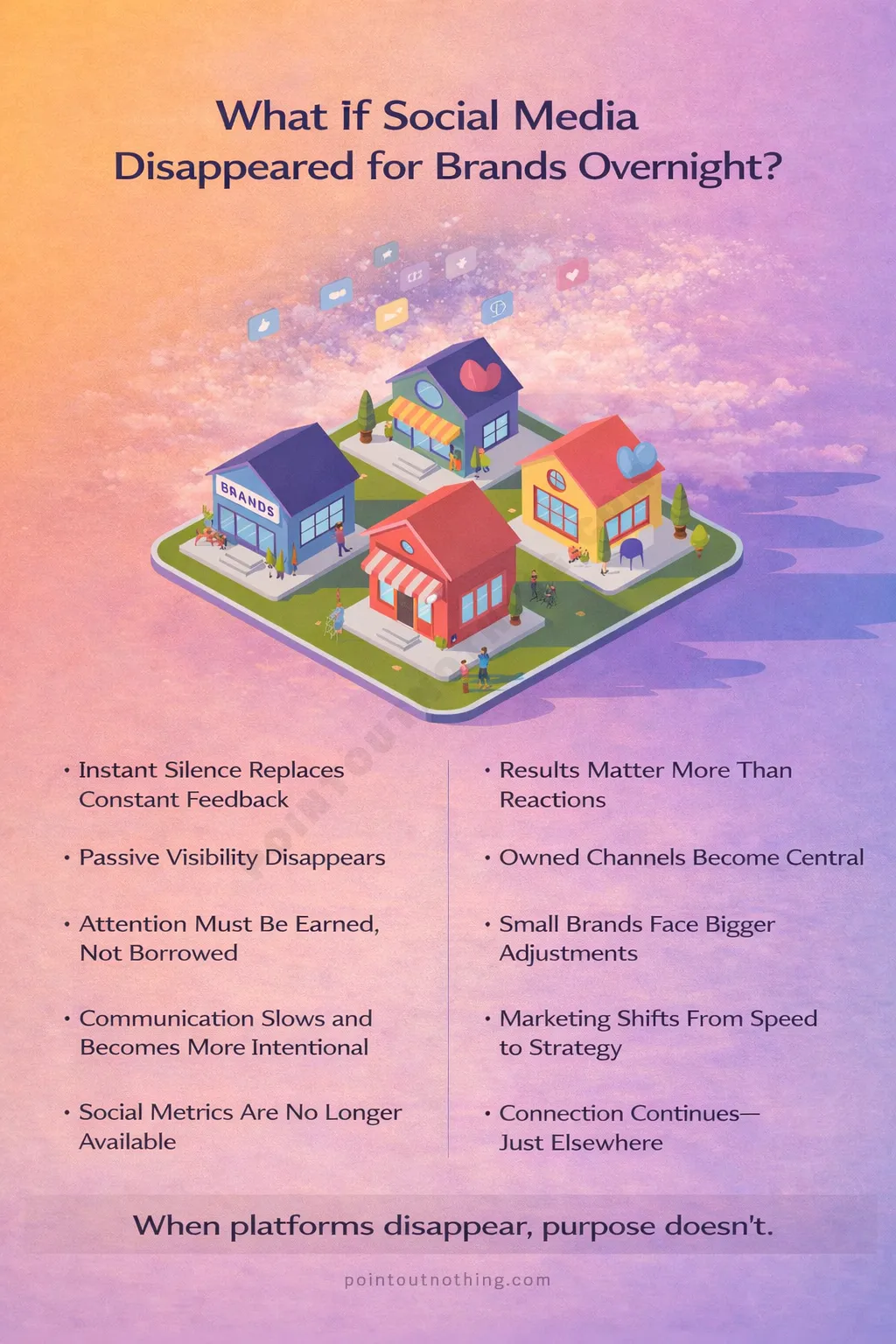
If social media vanished suddenly, the first thing brands would notice is silence. No notifications, no comments, no direct messages, and no visible engagement numbers. The familiar feedback loop would stop immediately. For many brands, this loop has become a daily signal of relevance, and its absence would feel unsettling.
Without social platforms, communication would no longer feel instantaneous. Announcements would not travel through feeds. Promotions would not be amplified by shares. The sense of constant presence would fade. Brands that rely heavily on social media would feel temporarily disconnected from their audience, even though the audience itself has not disappeared.
One of the biggest shifts would be the loss of passive visibility. Social media allows brands to appear in front of people without a direct invitation. Feeds create exposure through repetition, even when users are not actively looking for a brand.
Without this mechanism, visibility would become more intentional. Brands would need to be found rather than encountered. Websites, email newsletters, search engines, and direct outreach would regain importance. This shift would not reduce reach entirely, but it would change how reach is earned.
Attention would no longer be borrowed from platforms. It would need to be invited.
Social media has shaped how brands speak. Messages are shorter, faster, and often reactive. Trends influence tone. Timeliness is rewarded more than depth. If social media disappeared, this style would no longer be necessary.
Brands might return to longer-form communication. Messaging would slow down. Instead of reacting to daily trends, brands would focus on clarity and consistency. Communication would likely feel less urgent and more deliberate.
This shift could feel uncomfortable at first, especially for teams used to constant publishing. But over time, it might create space for more thoughtful messaging.
Another immediate challenge would be measurement. Social media provides visible metrics that update quickly. Likes, shares, impressions, and engagement offer instant signals, even if they are imperfect.
Without these metrics, brands would lose a familiar sense of performance. Results would take longer to observe. Feedback would arrive through different channels, often indirectly. This would require patience and a different approach to evaluation.
Performance would be measured less by reaction and more by outcome. This change could feel risky, but it might also reduce the pressure to optimize constantly.
Social media platforms act as intermediaries between brands and audiences. When platforms disappear, that layer is removed. Brands would regain full responsibility for their communication channels.
This would highlight the importance of owned assets. Websites, email lists, and direct customer relationships would become central again. Instead of building audiences on rented space, brands would invest more in spaces they control.
While this requires more effort, it also provides stability. Relationships would be less dependent on algorithmic changes and platform policies.
Not all brands would be affected equally. Large brands with established recognition would adapt more easily. Their visibility exists beyond social platforms. Smaller brands, especially those built primarily through social media, would face a greater challenge.
However, this does not mean smaller brands would disappear. It means they would need to find different paths to visibility. Community building, partnerships, referrals, and search presence would play larger roles.
The absence of social media would not eliminate competition, but it would change its shape.
The disappearance of social media would feel dramatic, but it would not mark the end of marketing. Marketing existed long before social platforms and would continue in different forms. The core principles would remain unchanged: understanding the audience, communicating value, and building trust.
What would change is the pace. Without constant feeds, marketing would move more slowly. Campaigns would be planned with longer horizons. Short-term reactions would give way to longer-term thinking.
This shift might reduce noise while increasing intention.
Beyond strategy, there would be a psychological adjustment. Social media provides validation signals, even for brands. Seeing engagement feels reassuring. Losing that feedback could feel like losing relevance, even when that is not the case.
Over time, this dependency might fade. Brands would learn to value outcomes over visibility. Confidence would come from results rather than reactions.
This adjustment would take time, but it could lead to a healthier relationship with communication and performance.
If social media disappeared, audiences would still exist. Needs would still exist. Products and services would still matter. Conversations would continue, just in different spaces.
Marketing would not end; it would redistribute. Attention would not vanish; it would concentrate differently. The disappearance of social media would not remove connection, but it would redefine how connection is built.
This thought experiment is not about predicting collapse or advocating removal. It is about noticing how deeply social media has shaped assumptions. Imagining its absence reveals which parts of marketing are foundational and which are dependent on platforms.
Social media feels essential because it is familiar, fast, and visible. But familiarity does not always equal necessity. When imagined without it, marketing looks quieter, slower, and more intentional.
Whether social media remains dominant or not, this thought highlights an important truth: platforms influence behavior, but they do not define purpose. When the channel disappears, the need to communicate does not.
And that need, unlike any platform, is not temporary.
Imagining social media disappearing overnight reveals something important, not about platforms, but about priorities.
Social media feels essential because it is fast, visible, and reassuring. It provides instant signals that something is happening. When those signals vanish, the absence feels uncomfortable, even unsettling. But that discomfort comes from dependency, not necessity.
If social media disappeared, brands would not lose their audience. They would lose a layer between themselves and that audience. Communication would slow down. Feedback would arrive later. Measurement would feel less precise. But the core work of marketing, understanding people, communicating value, and building trust, would remain unchanged.
What would change is how intentional marketing becomes.
Without feeds to lean on, brands would need clearer messaging, stronger foundations, and more patience. They would have to invest in relationships instead of reach, ownership instead of visibility, and outcomes instead of reactions.
This thought experiment is not a warning or a prediction. It’s a reminder. Platforms shape behavior, but they do not define purpose. When a channel disappears, the need to connect does not disappear with it.
And that need, to be understood, remembered, and trusted, exists far beyond any platform’s lifespan.
Why do ad metrics feel overwhelming at first? A practical look at running ads before the numbers make sense, and how understanding slowly develops.
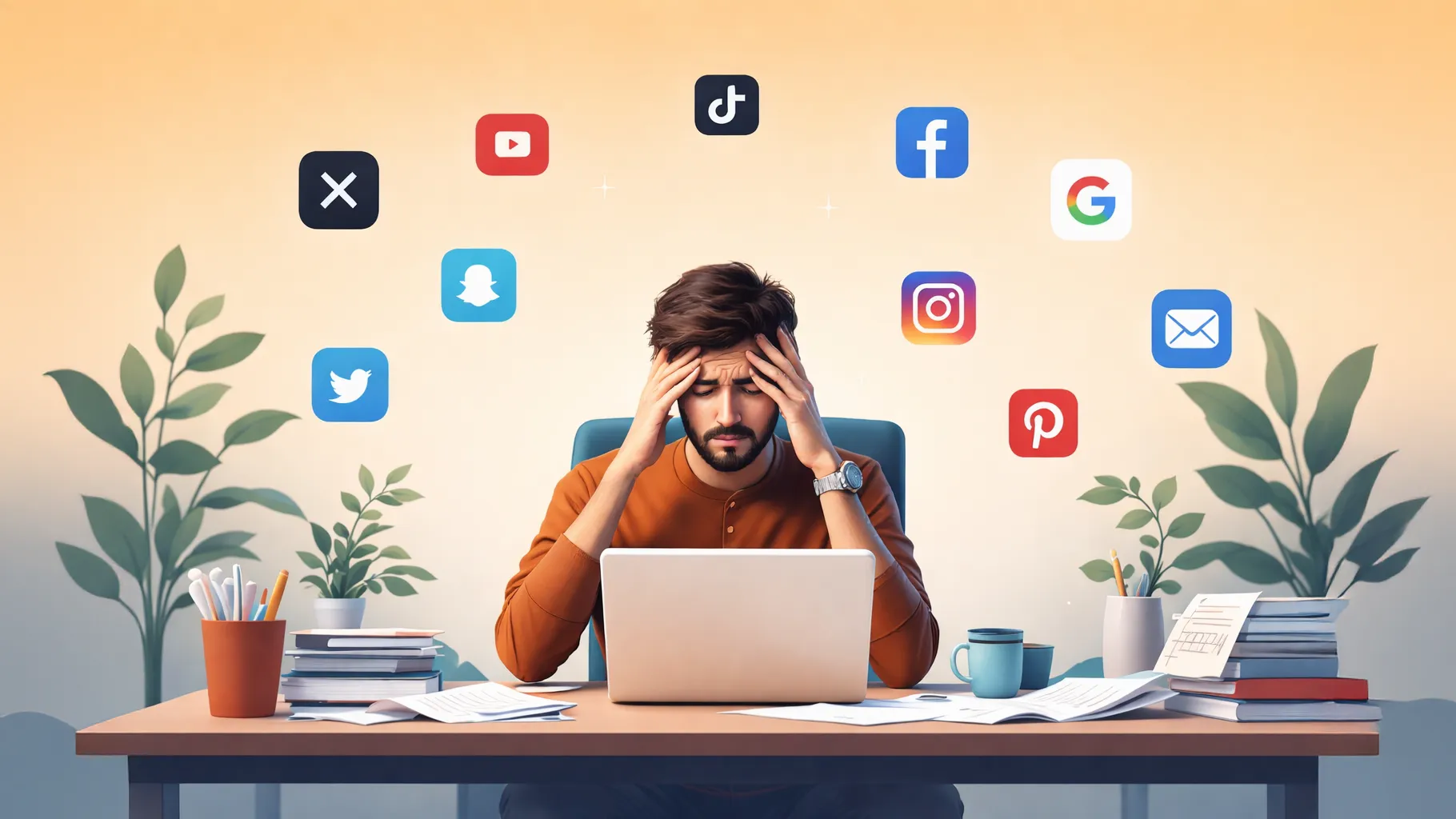
Social media marketing often feels more complicated than it should be. This article explores why platforms, metrics, tools, and pressure create unnecessary complexity.